
Designing Through the Midseason Garden Lull

By mid-July, many gardens lose their momentum.
Spring’s exuberance has faded. Late-summer perennials are still gathering themselves. Foliage is doing the heavy lifting, but the overall picture can feel muted, even tired. This isn’t a failure of planting. It’s a predictable moment in the garden’s annual arc.
Good design doesn’t panic (or give up!) here. It intervenes.
Work with what’s already speaking
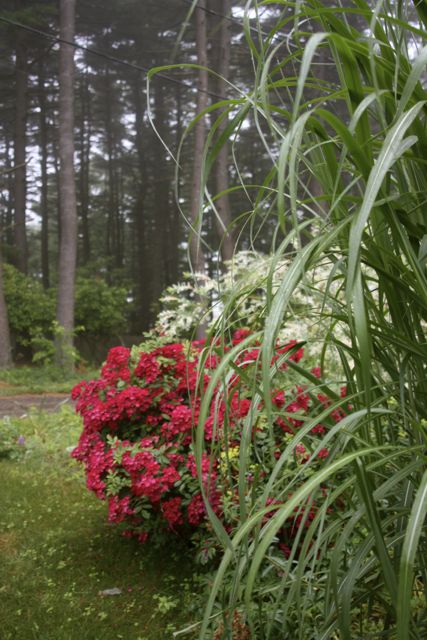
Every garden has something holding its ground midseason—a shrub in bloom, a tree with strong foliage color, a plant that looks unfazed by heat. That’s your starting point.
Instead of importing a new idea, echo what’s already working.
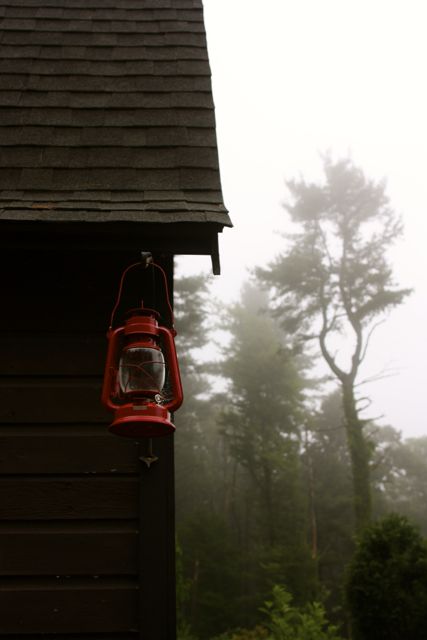
When a single color is already present and confident, repeating it elsewhere creates coherence. The garden begins to feel intentional again, even if many plants are simply resting.
This isn’t about perfection. It’s about perception.
Choose one color and commit
Midseason is not the time for complexity.
A single-color strategy works because it:
- Clarifies the visual field
- Connects distant areas of the garden
- Distracts from gaps, spent foliage, and transitions
Repetition does the real work. Containers placed throughout the landscape allow the eye to move easily, hopping from one moment of color to the next. The garden feels animated without being busy.
Scale matters here. A halfhearted effort disappears. A decisive one reshapes the whole experience so don’t be afraid to buy flats of something rather than just a few pots. Lean in it and make a statement.
Containers as punctuation, not decoration
An easy way to make a big difference is to think of containers as design tools, not accessories.
When places strategically, they:
- Reinforce rhythm
- Anchor entrances and thresholds
- Buy time while until the permanent planting catches up
Use midseason containers less for novelty instead, thing of them as a way to holding the line until the garden shifts again.

Temporary moves are legitimate design moves
There’s a persistent idea that good gardens should look resolved at all times. But real gardens don’t work that way.
They move. They pause. They regroup.
Designing for midseason is an acknowledgment that gardens live in time. Temporary color, repeated with intention, is not a compromise—it’s a strategy.
When the garden stalls, design steps forward.


