
Egyptian Gardens: Early Precedent for Designed Landscapes

Given current events—and the way my mind tends to work—I found myself typing “Egyptian gardens” into Google one morning, curious about what might surface beyond the familiar images of temples and monuments.
What I discovered was something I hadn’t fully appreciated before: ancient Egyptian gardens represent one of the earliest known traditions of intentional landscape design, with clearly articulated spatial planning and symbolic meaning.
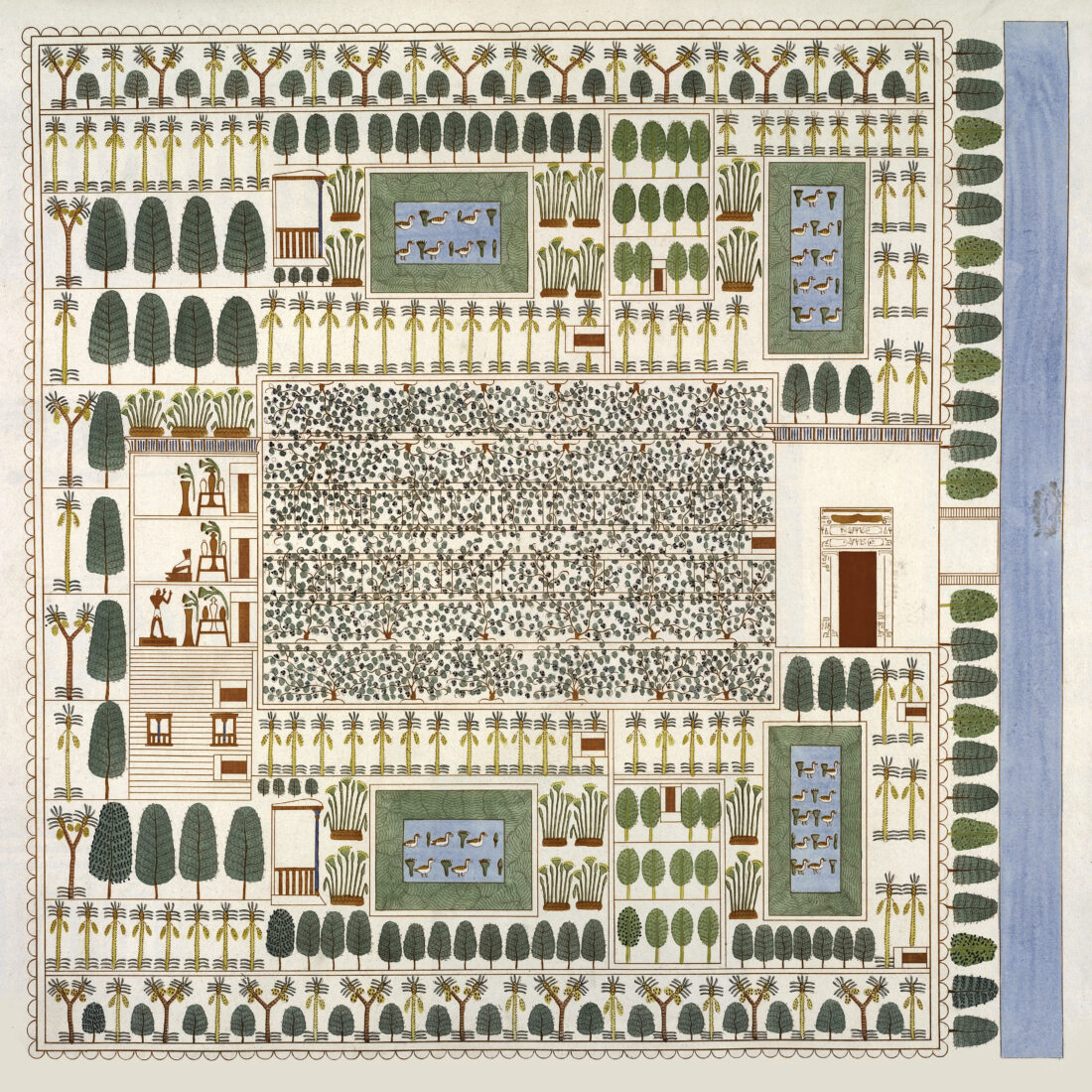
Rendered from tomb imagery, this flattened plan reveals one of the earliest known examples of intentional landscape design. Water, trees, shade structures, and circulation are carefully orchestrated, demonstrating principles—axial planning, hierarchy, and indoor–outdoor integration—that continue to shape garden design today.
Among the most affluent Egyptians, homes were often conceived as garden houses, where interior rooms and exterior spaces flowed together. Gardens were not decorative afterthoughts but functional extensions of daily life—places for shade, food production, ritual, and reflection.
What survives today—through tomb paintings and plan-like depictions—reveals a remarkably consistent garden structure.

Created by Charles Chipiez and published in 1909, this image reflects scholarly interpretations of ancient Egyptian gardens as highly structured, enclosed spaces centered on water. In a harsh, arid landscape, such gardens signaled immense resources, labor, and cultural importance.
As described in historical records:
“Many depictions in tombs show what might be the standard garden: typically a symmetrical layout with a rectangular or T-shaped pond placed on the main longitudinal axis. Rows of trees surrounded the water, often arranged by height, with shorter species closest to the pond and taller palms planted at the perimeter. Pergolas lined primary paths, fruit trees were trained along trellises, and ponds were stocked with fish.”
What I find especially compelling is how these gardens were represented visually. Rather than perspective views, Egyptian garden drawings flatten space outward from a central axis. Trees splay to the sides, water features anchor the composition, and the entire garden reads almost like a diagram—simultaneously symbolic and spatial.
It’s tempting to see these drawings as primitive. They are not. They are deliberate, legible, and instructional.

Painted as part of Nebamun’s funerary chapel, this scene shows a lush estate garden centered on a life-giving pool. Water, lotus flowers, and carefully chosen trees symbolized rebirth, abundance, and eternal renewal—an image of the ideal afterlife as much as a record of elite garden design.
For anyone interested in the origins of designed landscapes, Egyptian gardens offer an early example of ideas that still shape our work today: axial organization, graded planting for visual hierarchy, water as both resource and meaning, and the seamless relationship between architecture and landscape.
These gardens weren’t ornamental luxuries alone—they were demonstrations of hydraulic knowledge, labor power, and control over water in an unforgiving climate.
If you’re curious to go deeper, Garden Visit offers solid historical material on Egyptian garden symbolism and plant use. I was particularly intrigued by discussions around the possible reconstruction of Sennufers garden, often cited as the oldest known designed garden. Wikipedia also provides useful overviews that place Early Egyptian within the broader lineage of early Persian and Roman traditions.
Much of what we still recognize as “formal garden design” begins here—long before Versailles, long before Rome.
This is where garden history stops being academic—and starts becoming relevant again. These gardens weren’t only meant to be enjoyed in life—they were rehearsals for eternity.
Keywords:
- ancient Egyptian gardens
- garden history
- early landscape design
- Sennefer garden
- Nebamun garden
- formal garden origins
- water in garden design
- garden symbolism
- historic garden precedent
- ancient landscape architecture
- history of garden design
- earliest designed gardens
- symbolism in ancient gardens
- gardens and the afterlife


:max_bytes(150000):strip_icc()/byr-the-30-best-black-friday-deals-tout-387cd8bcf4cd4007b3ee062bbd0bc0a4.jpg?w=1300&resize=1300,800&ssl=1 "50 Best Early Cyber Monday 2025 Deals")


