
Woodworking as an Emotional Salve

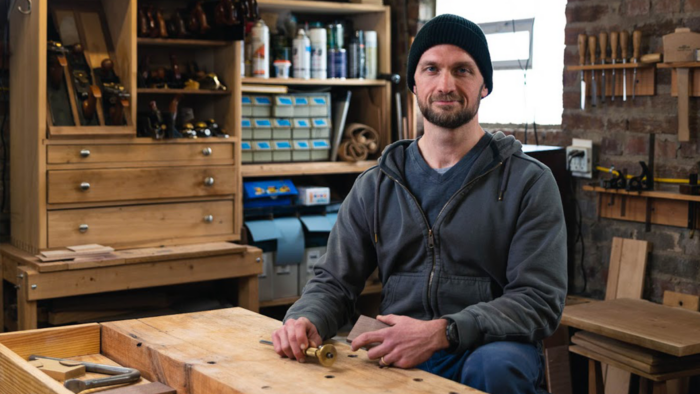
This is part two of a three part series. Read part one here.
Tool storage debates are one of those things that can light up online discussion board like a Christmas tree. I have no interest in sparking such a debate. I’ve used various tool storage methods for the past 15 years as my collection has grown: a modified Anarchist Tool Chest, a Dutch Tool Chest, drawers under my bench, and various combinations. What I’ve determined is that I like things on the wall and close at hand. I don’t want to move one tool to get to another. I like each tool to have its own place to live. There are pros and cons to all of the methods and at the end of the day, the pros of a wall-hung cabinet outweigh the cons for me. For you, it might be different.

Feeling quite confident in those opinions, the next question became: how should I design this thing? What elements do I like and how much space do I need? I started looking around the internet and came across Mike Pekovich’s wall-hung tool cabinet. I’ve always appreciated his design aesthetic and the piece struck me as being not only well-designed, but something with a balance of being a high quality piece of furniture with features and approaches that made it practical for the shop. I filed the plans away and kept looking around. I searched around YouTube, kicked ideas around with my good buddy Thomas, who always has leads on cool shop ideas and new tools, and I kept an eye out in other shops and magazine articles. I kept coming back to the Pekovich design. But, how would I make it my own? Put my imprint on it and not just copy the plans–wasn’t that a beginner move? Something for newbs? Download the plans and just follow the instructions… OK, rookie!

After a period of time of letting my ego keep me from starting with the plans, I eventually decided there was nothing I needed to do to change the design. The dimensions worked for my space. I liked the look and function–I even liked the methods that were suggested. So, finally, I made the decision to do the thing just as Mike laid it out. Curiously, in all of my woodworking efforts leading up to this, I had followed someone else’s plans only once before. Not having to design anything would save me precious time. Still, I figured it would probably require a couple of weeks to complete and I did not have the luxury of pausing commissions to build a tool cabinet, nor the energy to work on personal projects in the evenings.
The plans were printed in summer of 2024 and I intended to get on my schedule for 2025. I would use it as a refueling project–take two weeks away from commissions and build something nice for the shop. The business case (or rationalization) was that having better tool storage would be, in the long run, really great for workflow. Additionally, I was gearing up to teach more in my home shop and having everything handy and in a fancy case would be nice for the students.
2025 ended up being a weird year personally. My mother, Jeanne, developed dementia a few years prior. Throughout the Covid years, she started to decline. I visited regularly and each time it felt like she was less and less “there.” In February of 2025, I made a visit home and it became clear that the end was approaching. In addition to the loss of mental clarity and memory, her physical health was failing too: she had a hard time walking and was falling periodically. A month or so later, the decline got even worse. I was teaching at the Florida School of Woodwork during this decline. It was a weeklong class and on Thursday morning, I had a text from my Aunt to call home. Mom had fallen 4 times over night; they had to call the fire department to help get her back to bed. She was, mercifully, uninjured from the falls, but was hospitalized to see if something major had happened–an infection or whatever. Dad implored me not to come home, but to stay the course with my plans. A few days later, mom was moved to a rehab facility where she would have physical therapy to help her walk better. There was hope we could address the physical aspects, if not the mental.
Between April and November, I would spend about 12 weeks at my parents’ home. First, I went to help her transition back to home after having been in the rehab facility for four weeks. Then, periodically just to give dad a break. It should be said that dad was a champ this whole time, serving as mom’s primary care-giver. When I visited in September it was clear the time had come to put the business on pause and be with my parents. Mom passed away about 6 weeks later, on November 3rd. She was a great mom, an impressive person, and probably influenced my creative pursuits more than I previously realized. You can read about her here.
After the services and the paperwork I returned home to DC. There was one commission that had been put on hold mid-project–a large dining table that needed a few days of work. After delivering that piece to very understanding and patient clients, taking care of some paperwork and accounting, cleaning up the shop space, I decided I would build the tool cabinet.

I was at another crossroads; another period of the unknown with complicated emotions and uncomplicated memories. I was mourning my mom’s passing and also recovering from witnessing her decline. Different people need different things at times like these. I needed my friends and family. I needed baked goods and quality coffee. And…I needed the salve of woodworking, my old companion. I needed to make something that had no budget, no delivery date, no outside input. No stress. I needed the joy of fitting joints. I needed the order of neatly placed tools. So, I pulled out the plans and I got to work.

Busy Hands, Clear Head
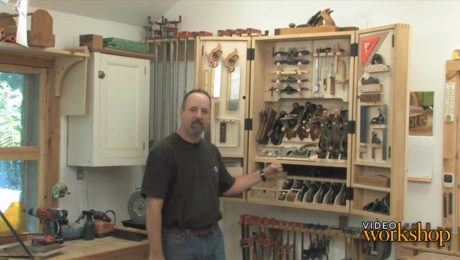
Build a Hanging Tool Cabinet
Introduction: Build a Small Tool Cabinet
Fine Woodworking Recommended Products

Woodriver Rechargeable Desiccant Bag
Placed in a drawer, cabinet or closet, the bag immediately begins to absorb moisture from the air, which reduces corrosion.
WoodRiver Router Bit Storage Case
Molded from high impact clear ABS, this WoodRiver case provides a strong storage solution to keep your router bits safe and dry.
Sign up for eletters today and get the latest techniques and how-to from Fine Woodworking, plus special offers.


